
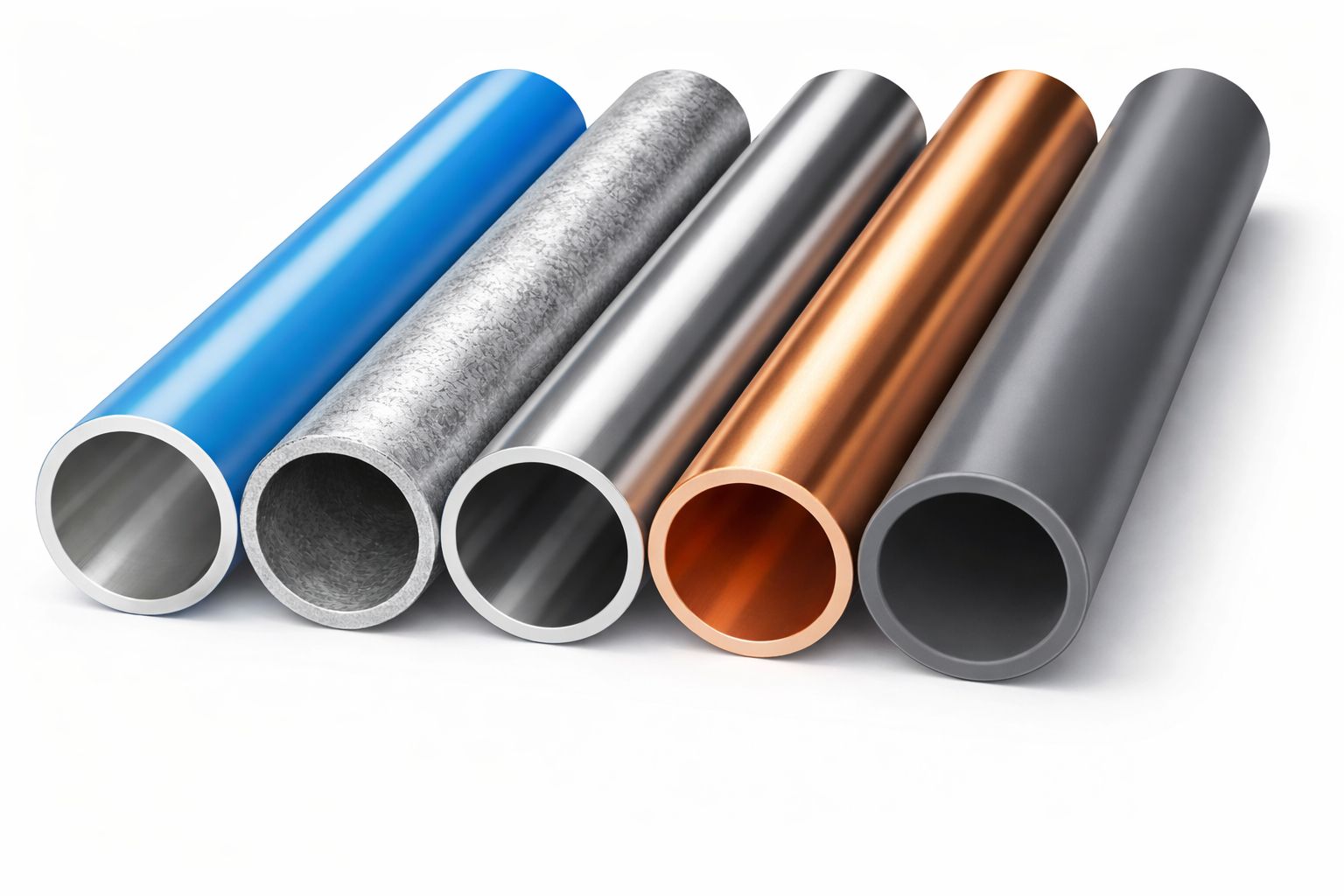
Selecting the right material for industrial piping has a direct impact on system performance, safety, and lifecycle costs.
Aluminum systems are lightweight, corrosion-resistant and easy to install. Their smooth internal surface reduces pressure losses, making them ideal for compressed air and inert gas systems. Aluminum piping also requires less maintenance over time and supports fast, modular installations, an advantage in modern, flexible production environments. It is best for compressed air, low-to-medium pressure gases, clean and dry systems. Despite of it is sensitive to corrosive fluids and high temperatures.
Steel offers high mechanical strength and excellent resistance to high pressures and temperatures. It remains the preferred choice for heavy-duty applications, aggressive media, and environments with significant mechanical stress. However, steel is heavier, more labor-intensive to install, and more susceptible to corrosion without proper treatment.
Stainless steel is chosen when the goal is to ensure hygiene and prevent corrosion. This is why this material is commonly used in food, pharmaceutical and healthcare industries, due to its stability across a wide range of temperatures and on humid, saline or chemically aggressive environments. Although the initial investment is high, its low maintenance and long lifespan ensure a low overall cost of ownership.
Copper is used in installations where low internal corrosion of the pipe and fluid cleanliness are paramount, making it suitable for potable and domestic hot water. The main disadvantage of this material lies in its high cost and high ductility, as the pipe can be damaged by any impact. Copper is very sensitive to ammonia, strong acids, halogens, and strong oxidizers.
Plastic is the go-to material in the chemical industry, water treatment, and highly corrosive processes. Besides its low cost, it stands out for its good thermal insulation, light weight and smooth internal surface. Even so, its use must be avoided depending on temperature and pressure conditions.
There is no one-size-fits-all solution. Aluminum excels when efficiency, cleanliness, and ease of installation matter most, steel remains essential for extreme operating conditions, stainless steel is used as standard on cleanrooms, copper is used in hygienic and domestic water applications and heat exchanger systems, while plastic piping is used in corrosive applications and low demanding operational conditions. Understanding system requirements is key to making a smart, long-term investment.