
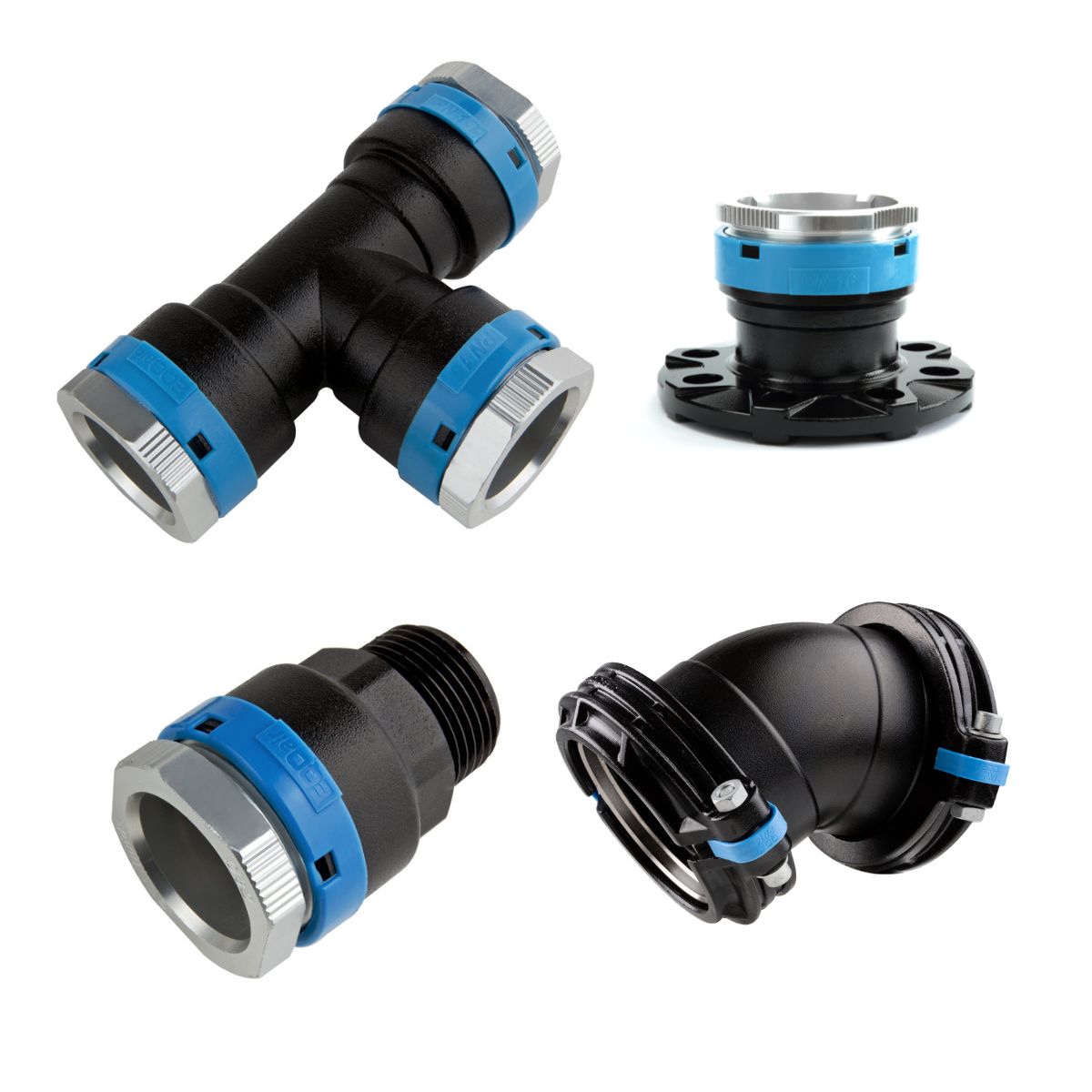
Hydraulic systems rely on precision, durability, and leak-free connections to function efficiently. At the core of these systems are hydraulic fittings, small but critical components that connect hoses, pipes, and tubes while maintaining pressure and flow integrity. Choosing the right fitting is essential for performance, safety, and longevity.
In this article, we explore the main types of hydraulic fittings and their practical applications across industries.
1. Threaded hydraulic fittings
Threaded fittings are among the most commonly used types. They connect components using screw threads, creating a tight seal.
Applications: Threaded fittings are widely used in general-purpose hydraulic systems, including construction equipment, agricultural machinery, and industrial fluid systems. They are ideal for applications where ease of assembly and disassembly is important.
Advantages:
- Easy to install and remove
- Widely available
- Cost-effective
2. Flared fittings
Flared fittings use a flared tube end to create a seal between the fitting and the tubing.
Applications: These fittings are commonly used in high-pressure systems such as fuel lines, refrigeration, and hydraulic braking systems. Their design ensures a strong, leak-resistant seal.
Advantages:
- Excellent vibration resistance
- Reliable sealing in high-pressure environments
- Reusable
3. Compression fittings
Compression fittings use a ferrule (a small ring) that compresses onto the pipe when tightened, creating a seal.
Applications: Ideal for low to medium-pressure systems, compression fittings are frequently used in instrumentation, water lines, and pneumatic systems.
Advantages:
- No need for welding or soldering
- Quick installation
- Suitable for tight spaces
4. Crimped (permanent) fittings
Crimped fittings are permanently attached to hoses using a crimping machine.
Applications: These fittings are widely used in heavy-duty hydraulic systems such as mining equipment, construction machinery, and industrial manufacturing lines where high pressure and reliability are critical.
Advantages:
- Extremely secure connection
- High-pressure capability
- Reduced risk of leakage
Limitations:
- Not reusable
- Requires specialized equipment
5. Push-to-connect fittings
Push-to-connect fittings allow for quick and easy assembly without tools.
Applications: Commonly used in low-pressure hydraulic and pneumatic systems, such as automation systems and light industrial equipment.
Advantages:
- Fast installation
- No tools required
- Easy maintenance
6. O-Ring Face Seal (ORFS) fittings
ORFS fittings use an O-ring to create a flat-face seal, ensuring leak-free performance.
Applications: These fittings are ideal for high-pressure hydraulic systems and environments where leaks must be minimized, such as in oil and gas, mobile equipment, and industrial hydraulics.
Advantages:
- Superior leak prevention
- High-pressure resistance
- Reliable in vibration-heavy environments
7. Quick disconnect couplings
Quick disconnect fittings allow fluid lines to be connected and disconnected rapidly without fluid loss.
Applications: Used in applications requiring frequent connection changes, such as agricultural attachments, construction tools, and maintenance operations.
Advantages:
- Time-saving
- Minimizes fluid spillage
- Enhances system flexibility
Selecting the correct hydraulic fitting depends on several factors:
Pressure rating: Ensure the fitting can handle system pressure.
Temperature range: Materials must withstand operating conditions.
Fluid compatibility: Prevent corrosion or degradation.
Application environment: Consider vibration, movement, and exposure.
Ease of maintenance: Determine whether reusability is required.
Conclusion
Hydraulic fittings play a crucial role in ensuring the efficiency and safety of fluid power systems. From threaded and compression fittings to high-performance ORFS and crimped connections, each type serves a specific purpose. Understanding their characteristics and applications helps engineers and technicians select the right solution for optimal system performance.
At Eqofluids, we emphasize quality and precision in every hydraulic component, because even the smallest connection can make the biggest difference.
Looking to optimize your hydraulic systems? Check Eqofluids product catalogue for the most suitable solution for your installation systems.